Axolotll

Weird how cultural perceptions change over time. When I was a kid, axolotls were really freaky looking, almost science fiction, even scary, like aliens. As bizarre looking a creature as you could find on earth. Even the name, a Nahuatl word (they are found in lakes around Mexico City), meant water monster. A little foot long water monster, pink (a relatively rare color in the wild, they are typically brownish) and exotic and weird, especially with those bizarre juvenile gills retained in adulthood. Now in this adorable educational video, fifty years later, they are seen as positively cute. They look cute to me even. How can anyone not love that anthropomorphized smile? Ripley (distinctly not a Nahuatl word for water monster) seems to have a personality, like an anime character (though in Japan, where giant salamanders are five feet long and without the neotenic gills, salamanders are more unnerving than cute and even show up in a Godzilla movie). Somewhere over this past half century there’s been a fundamental shift in what is freakish and what is cute, a shift that even changed my own perceptions. Who knows how this works. Collective thinking. We are still far from a full understanding of how our brains work, and just beginning to figure out how all our brains work together. We stumble through existence with this unparalleled device in our heads, clueless, almost, as to what it is making us think and see and do and remember.

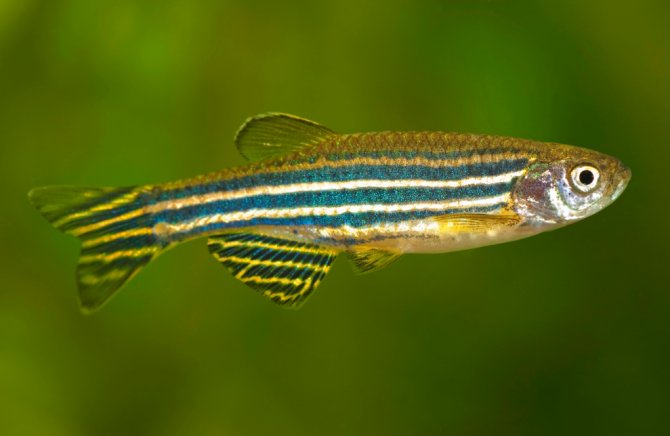
I’m not sure when exactly the zebra danios turned into killers.

Our zebra danios have gotten scary. Where once they’d dash about madly at the top of the tank waiting for the flakes of food, now they wake slowly from sleep, huddled together, then in a three fish column begin moving slowly (not their usual frantic dash) into the plants, moving around them, seeking meat. The flakes of fish food float down all around them but they pay no attention. They keep prowling, methodically, maybe an inch or two from the bottom of the tank. I’ve come to suspect that this was how they killed the other fish, by catching them before they were completely awake there amid the plants. I can only imagine that all three would rush in, striking, chomping, killing. In the wild they eat insects and crustaceans and worms, so they are hunters, yet in the thirty some years we’ve been stocking our aquariums with them I have never witnessed them do anything more than grab flakes of fish food drifting by. I have certainly never seen this sort of apparently coordinated behavior. It seems that almost every vertebrate has within it the predatory behavior. We are all hunters. Hell, it was predation that drove evolution itself, the whole Cambrian Explosion with all its crazy speciation was the result of the ever evolving contest between predator and prey. And here, somehow, in our little aquarium, something turned these little inch and half long fish from eaters of fish food to eaters of fish, eaters of even their own kind (as there were five of them just two weeks ago). All was peaceful until the clown loach died. That loach, though never deliberately bothering any of the other fish, was at seven inches long to them like a whale shark is to us. It ruled the floor, digging up snails. The danios stayed up several inches in the tank, away from its sudden movements. But then the loach, one day two or three weeks ago, was dead. Old age. I noticed the next morning that the danios were down zipping around at the bottom of the tank. The neon tetras calmly minded their own business, the two glass catfish scooted about. Everyone, danios included, got very excited at feeding time, like they always did. Everyone swam around excitedly, grabbing bits of tetra min flakes floating by.

I’m not sure when exactly the danios turned into killers. Within two weeks I realized that all the fish were gone but these three zebra danios. Alone in the tank, they chased each other madly about, zipping one way, then another. I was mystified. Where had all the other fish gone? I did some research, and found desperate pleas on aquarium websites. “Help, my zebra danios are eating each other!!!!” or “My zebra danios are killing my other fish!!!” I read in shock just how murderous the little beasts can be. No one seemed to know why, but there was usually a dominant fish that sets it off. A handy bit of evolution, that, where some members of the species will suddenly go rogue, turn alpha, and eat everything piscene in sight. Obviously there is a genetic advantage in there somehow. Perhaps a surge in zebra danio testosterone. But I have no idea. Looking at the tank again, one of the danios is swimming like a lunatic now, frenzied. The other two have ducked behind the leaves. Perhaps there is murder afoot.

zebra-danio2

It doesn’t look like a killer.

A shark goes for a walk

Nice bit of convergent evolution on display here when you compare this shark with the fish that evolved into all us four-limbed landlubbing tetrapods. Our own fish ancestors, though, were lobed finned with bone skeletons (like coelacanths, or an even better example, lungfish). Mudskippers, a walking ray-finned fish, are another bony fish though unlike either early tetrapods or this epaulette shark, it uses only its pectoral fins and not the pectoral and pelvic fins. Mudskippers pull themselves around by their front limbs. Tetrapods and epaulette sharks walk. Or proto-walk. They use all four limbs. Watching this little epaulette shark is eerily like watching a monitor lizard. It’s hard to think of anything strictly terrestrial that moves like a mudskipper. Yet it is conjectured that most early tetrapods like Tiktaalik lived much like mudskippers, and not much like this epaulette shark. Go further back a few million years into tetrapod evolutionary history and you can find lobed fish, such as Panderichthys, that probably lived lives much like our walking shark. Unlike mudskippers and we tetrapods, however, sharks are famously boneless. They leave lousy fossils, mostly teeth. Some really terrifying teeth, too. Megalodon has left its thirteen inch incisors scattered in fossil beds world wide.

But this shark here is maybe three feet long and quite harmless, and I watch and rewatch him perambulating across the Coral Sea floor cartilaginously, a nifty trick, but severely limiting if one is thinking about evolving into a land animal. Without the buoyancy of water, one needs the support of a bony skeleton. Gravity is a bitch. But one also needs a bony skeleton to evolve fins into limbs that all of us tetrapods use for legs, arms, feet, hands, fingers, toes, and wings (and sometimes back into fins). The jointedness of bones seems to open up a wide range of mutation possibilities–and evolution is all about mutations–that cartilage just does not seem to have. Sharks and us have been on dramatically divergent evolutionary paths since we last shared a common ancestor well over four hundred million years ago. And shark evolution, though impressive enough in its sleekness, is vastly less varied than that of those of us who spring from the homelier lobed finned fishes (and less varied than the bony ray-finned fishes, which make up well over 99% of all fish species but never left the water). Aside from our perambulating friend here, all sharks (and their cousins, the rays) swim, while nearly all of the tetrapods (i.e., four limbed creatures who live on land) walk. But the same mutational capacity that enabled the first tetrapods’ pectoral and pelvic fins to evolve into a dizzying variety of limbs continues to enable tetrapods to evolve amazing adaptations with their limbs. Vertebrate flight has evolved three times (pterosaurs, birds, bats) while frogs and kangaroos hop and snakes and legless lizards slither limblessly. There are lizards and a number of mammals who glide. Pangolins go totally post-tetrapodal and curl up into an armored ball and hurl themselves down hillsides (the sort of thing that does not show up in cladistics.) A few tetrapods have even gone back to the ocean for good to swim again, the front limbs evolving again to pectoral fins, the backs legs disappearing entirely, as if four hundred million years of terrestrial evolution had all been some terrible mistake.

Yet the simple advantages of walking along rather than swimming over a shallow sea bottom (watch the video at about 25 seconds when the shark stops to peer into a cavity, looking or smelling for possible prey) apparently led this shark along a trail of mutation that eventually allows the thing to walk with ease. And it is extremely unusual for a shark. The range of design among sharks and rays is very minimal. Very few sharks don’t look very similar to other sharks. Rays look like rays. A Greenland shark is notorious for being so old and creepy and strange looking. But it looks very similar to almost all other sharks. An aquarium with nothing but sharks would be a pretty dull looking aquarium. They look a lot alike, they act a lot alike. Then we see a video of a epaulette shark walking along the ocean floor like it’s the most natural thing in the world.

A prowler of tidal zones, an epaulette shark can survive for hours in extremely low oxygen pools. It cannot breathe air, though, as mudskippers and lungfish do and our own water’s edge ancestors once did. Rather this shark has evolved a way to reduce blood flow in critical periods to all but the brain and heart. Handy, but a no go as a terrestrial adaptation. One needs to breathe air to make it on land. So this remarkable shark is no more like us than we are like it. It’s a marine animal who sometimes can stay on the edge of land for a couple hours, just as we are terrestrial animals who sometimes can swim with the fish for short periods.

But it was the combination of using fins to lift and carry across surfaces (i.e., walking) where swimming was difficult or impossible, with getting oxygen from the air via lungs (i.e., breathing) instead of taking oxygen from the water via gills, that made vertebrate land animals possible. (Insects were already there–doubtless tetrapods were eating them–but they had evolved from marine invertebrates, and our last common ancestor was somewhere deep in the Pre-Cambrian). There are over 30,000 species of tetrapods today–7,500 amphibian, 10,000 reptile, 10,000 bird and over 5,500 mammal species–and all remarkably seem to have come from one species of lobed finned fish that managed to combine both fin walking and air breathing, and had an unusual capacity for mutation in pectoral and pelvic fins. There was a wide range of these mutated fins at first–as many as eight digits on each fin–before the final five toes/fingers was arrived at. (Perhaps the occasional six toed kitten or baby are a mutational echo of that.) There seem to have been many species that could do so and apparently the lush and swampy Devonian shore line was rich enough in food and varied enough in niches a half billion years ago to allow evolution to run riot. But apparently only one of those species led to all the four footed or two footed and two armed or winged creatures breathing air today, including us. And while this beautiful little epaulette shark has nothing to do with any of our own evolution since the Devonian, as it is only very distantly related to any of us tetrapods, watching it trundle across the ocean floor does give a brief glimpse of what our own origins looked like nearly half a billion years ago.

Cats–a forgotten draft

(an early draft of Cats, 2012)

Mockingbirds are strafing one of the neighborhood cats. A whole little mockingbird community, who spend all night and days shrieking at each other (at 3 a.m. it was a battle of car alarms) have banded together to dive on the hapless cat, who is frantically looking for cover. The birds are all fired up, having just driven off a pair of nest robbing ravens. So much violence.

I find it hard to feel sorry for Fluffy. Fluffy (not his real name) is a friendly cat, yes. Cute even, on occasion. None of the people around here have any issues with him. But mockingbirds have damn good reasons for taunting him. Cats love stalking and pouncing on birds. People deny that their cat does — kitty would never kill a bird — but pet cats let outdoors have wiped out a lot of urban bird populations. They can’t help it. It’s what they do, cats. They’re hunters. And so are coyotes, and all those pet cats people let outdoors provide a steady diet for coyotes. I suspect we wouldn’t even have populations of urban coyotes if it weren’t for all the house cats people let outdoors. The more cats people have, the more cats there are outside, the more coyotes can survive living among people. You could probably graph the rise in the popularity of cats as pets with the increase in the urban coyote population. You could, but you’d have a hard time getting laid afterward.

We used to have a local population of feral cats. Some big mean toms. They’d fight all night, those eerie, annoying cries of their’s waking everybody up just in time for the burst of intense violence that followed. Sometimes you’d hear cat bodies being thrown against the side of the house with some serious force. Amazing how much energy a cat can expend in a fight. Not for very long. Cats are anatomically sprinters, not long distance runners, like dogs. All their energy has to be in astonishing bursts, since the oxygen in a cat’s blood is quickly depleted. Hence their contests are more build up than action, and size almost always wins. So the biggest, meanest cats ruled our neighborhood. Nearly all of them were feral. The pet cats would skitter home beat up and bleeding. It was getting to be a problem. Cats making a helluva racket all night. People yelling at the cats. No one getting much sleep.

Then a pack of coyotes moved into the neighborhood. End of problem. The endless war cries of cats were replaced by the occasional high pitched yelps of excited coyotes. You’d hear them running down the street on the hunt. It’s weird, a quiet neighborhood and the yelping of wild canines. Like all this civilization wasn’t even here. Like it has been stripped away for a moment and you could hear what it was once like. It’s so spooky it’s thrilling.

The coyotes ate all the stray cats. And they ate a lot of pet cats, foolishly let out by their owners. They ate a lot of little dogs, too, right in their back yards. Sad little flyers appeared on telephone poles. Rewards were offered. There’s one right outside now. I can see it from my window. The little dog is just darling. The reward is one thousand dollars. There’s a lot of money in Silver Lake.

I like cats. And I dig coyotes. And birds. Ours are indoor cats only, so off the menu, and birds are off theirs. They watch the birds from the window. My wife feeds birds. Sparrows, finches, a couple kinds of doves. Every once in a while a scrub jay drops in and scares off all the other birds. Not as often as before, though. It’s been a while since I’ve seen a lesser goldfinch, a hooded oriole, or a towhee. A long time. There were more bird species in Silver Lake when we moved here in the 80’s. Especially here near the river. The explosion in the pet cat population coincided with the disappearance of several species. Birds like the towhee which spend a lot of their time on the ground were just too easy for cats. There are far more cats now than there were twenty years ago. Everyone has a cat or three. Crazy cat ladies don’t seem so crazy anymore, merely eccentric. People leave food out everyday to feed the strays to feed the coyotes. Funny how coyotes might increase the bird population. I used to think they might. Haven’t noticed it, though. [I do now, in 2016. Even the towhees are back.] For every cat eaten there must be two more cats being brought into people’s homes. People are just mad about cats.

There are several theories about just why. The weirdest one is that cats have passed on a parasite that has altered our behavior and makes us pay lavish attention to our pet cats. Parasites can do that, nature is full of examples. The theory got lots of attention, a big story in The Atlantic, and the scientist behind it was all over television. The science is a little sketchy, though. Let’s just leave it now and agree that people are nuts about cats. And cats are nuts about killing birds.

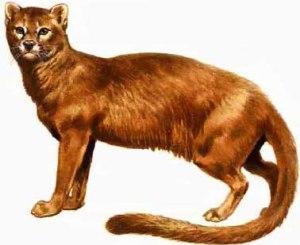
Cats are natural killing machines, remarkable animals, though we don’t really notice. The design hasn’t changed much since it’s inception around 30 million years ago. That cat, the proailurus,or dawn cat, looks remarkably like your cat.
Proailurus

It was even about the size of your cat. Amazing how little things have changed in thirty million years. The head seems a bit larger now, which might be to make room for a larger brain. The proailurus’ jaws seem extended a bit, too, more dog-like, and the evolutionary transition to a modern cat jaw probably accounts for the larger head of the modern cat. The one pictured above has decidedly more weasel like proportions…or less kitten like. The tail of today’s house cat is maybe two thirds as long. Perhaps because modern cats use their tails to communicate and a longer tail could not be held straight up as easily. A tail straight up implies fear, for instance, and held aloft with the top few inches at a 90 degree angle shows friendliness. That larger jaw of modern cats also helps with communication, I’d guess. Small sounds resonate more inside a larger mouth, vastly increasing the cats vocabulary. House cats have an extraordinary range of sounds they make to each other. Some they make to us. Some they make for each other. They’ll call to each other and you’ll try to get their attention and they completely ignore you. Some kind of intense cat to cat thing going on, and we’re not supposed to know, like when two people break into a language you don’t know with you standing right there. When they want to talk to you they’ll let you know.

Felines have been compared to sharks as being perfect predators. Perfect hunting machines. And like sharks, once the initial design was laid out there wasn’t much alteration needed afterward. Of course sharks go back over 400 million years, but evolution in the open ocean, where conditions change vary little over enormous stretches of time, can proceed much more slowly than on land. The environment on solid ground is much more volatile. Species are under constant pressure to change or go extinct. Think of how humans have altered in just a few million years. Indeed, look at how much size variation there is even with our own species (writes the six foot five inch man). Not cats, though. All the small cats, from the cute, vicious little sand cat to the largest of the small cats, the cougar (which purrs just like the domestic short hair in your lap) come from proailurus, and all look very similar. Today’s big cats–lions, tigers, panthers, leopards, cheetahs–all descend from pseudaelurus, which itself descended from proailurus.  Weird to think about, he says, a housecat staring at him as he types.

The action outside my window has abated, for now. The mockingbirds are back up on their branches, quiet, looking for threats. Fluffy is up on the neighbor’s porch, glowering. And as the sun sets a siren wails and the coyotes come to life.

Stromatolites

The World’s Oldest Fossils Are 3.7 Billion Years Old says the headline. They were discovered in Greenland. Apparently some Aussie paleontologists went all the way to a just as uninhabitable part of the earth as the Australian Outback–just colder–to find fossils of lifeforms older than anything in their own country.  And it’s not like they were looking for them–I have no idea what they were looking for, actually, it doesn’t say–they just happened to look closely at some rocks poking out of the melting snow (you rarely hear paleontologists complaining about global warming) and immediately recognized the distinctive shapes held therein. Stromatolites!  And if there is one place on earth with rocks older than Australia, it’s Greenland. Both are mostly craton–that is big pieces of ancient land that have sort of wandered about the globe with the tectonic currents, not being ground up by continental plates and belched back up as new igneous rock formations in the mid open trenches that stitch the ocean floor. Iceland, the whole island, is part of that grinding and belching process that somehow is above sea level. As such, Iceland is about as opposite from Australia or Greenland as any place on the surface of the globe can be. There are no fossils on Iceland, it is far too new and the rock was all basically molten not long ago. Australia and Greenland, though, were in large part land that was formed maybe four billion years ago, when land was first invented, and in Australia at least there is still some of it in virgin condition (we can’t see most of Greenland yet, it’s still ice and snow covered). Both the Australian and Greenlandic cratons contain incredibly ancient rocks, and where sedimentary rock was laid down a couple billion years ago in ancient shallow seas, you will find incredibly ancient fossils. The land today is so untouched in places that in the depths of Australia there is a famous fossilized beach, you can even see the ripples left in the sand by the waves. Groovy, in an incredibly ancient kind of way.

Of course, we are not talking dinosaurs here. We are billions of years before dinosaurs fossils, before almost anything even. Fossils from that far back are few and far between. Mainly, if not exclusively, they are stromatolites. There were untold jillions of stromatolites then, vast immobile herds of stromatolites luxuriating in the young planet’s overheated waters. Indeed, Earth was a young planet full of stromatolites with no one to eat them. It was sort of a vegan paradise. Since then, though, predators were invented and stromatolites have sheltered in the less hospitable places on earth, overheated and hypersaline. There they thrive, ignored, virtually unevolving. Were we to zap one of the fossil stromatolites with a time machine gun, it wouldn’t look much different than they do today. Hence they call today’s stromatolites living fossils, like coelacanths and horseshoe crabs and cycads and the Rolling Stones.

Australia had the oldest fossilized stromatolites in the world, nearly three and a half billion years old. Or they did until the Australians I mentioned above went wandering about the ancient rocks of Greenland and found the newest oldest fossils. Two hundred and twenty million years older, in fact. To give you an idea of how big a span that is, two hundred and twenty million years ago we mammals had just been invented. We were just squirmy little shrew like things, not very appealing. And birds hadn’t been invented at all. That’s how big a span of time two hundred and twenty million years is. And these Australian paleontologists found stromatolites in Greenland that were two hundred and twenty million years older (3.7 billion years old) than the celebrated 3.48 billion year old stromatolites from the Marble Bar Formation in the Pilbara region of way the hell out there Western Australia. Imagine having your oldest fossils rendered penultimate, just like that. By your own countrymen, no less. What a blow to the Australia paleontological ego, if not the body politic itself. The Government of Western Australia’s website even has a whole page boasting of “the world’s oldest known examples of fossil stromatolites (3.45 billion years old), found near Marble Bar in the Pilbara.” Ahem. Our trio of Australian paleontologists–we’ll leave them unnamed–will be a very popular bunch in the roadhouse in Marble Bar, the metropolis in the Pilbara closest to the now second oldest fossils, that’s for sure. No more free beers. Though they did push back the evolution of life on Earth even further than had been imagined. If relatively complex (by bacterial standards) stromatolites were flourishing 3.7 billion years ago, then bacteria itself must have been around much earlier than that. And the planet itself is only 4.5 billion years old. Life started here much earlier than we thought possible. I doubt, though, that would impress the locals at the roadhouse in Marble Bar. Their metropolis (population 208) was famous for one thing, and one thing only, the world’s oldest fossils. And now you’ve told everybody that they are the second oldest?

But even though the Pilbara stromatolites are a mere 3.48 billions years old, Australians can still brag (“some of the best examples of living microbialites“) that they have living stromatolites, if you call that living. Because several hundred miles to the southwest of Marble Bar, as the emu flies, is Shark Bay, and in the hottest, saltiest part of Shark Bay is a thriving stromatic metropolis. Probably the world’s most famous living stromatolites, actually, even David Attenborough paid a visit. Life forms just like this, he said with breathless and beautifully enunciated excitement, came to be in the Pre-Cambrian. He didn’t touch one. They’d feel like a slimy lichen. Which is sort of what they are, big stacks of slimy lichens, mostly made of cyanobacteria, and nowhere near as cuddly as the wallaby Attenborough had doubtless been cavorting with a day or two before.

However, despite their sliminess, these living stromatolites mean that Australia has had conceivably the longest continuous stretch of communal living on the planet. Even as the Australian craton wandered about the earth, bumping into other cratons and slowly bouncing off again, it had stromatolites. Even when the planet was wrapped in ice–the Snowball Earth hypothesis, a scary one if correct–some Australian stromatolites clung to some little saline hotspot. And they are still there, building up into stromatolites a couple feet high mat by microbial mat, like those layers of lichen you see on rocks but with little grains of sand worked in and held fast by slimy bacterial excretions to provide the structure the way we use girders to build our skyscrapers (though to a cyanobacterium a two foot high stromatolite would be millions of times taller than the Empire State Building.) They link their little flagella together somehow too, like holding tiny bacterial hands, and then they sit there and metabolize. That’s about it. That is what stromatolites so. No scurrying about like in an ant colony or a beaver dam or Los Angeles. Just four billion years of stromatolites doing essentially nothing, but doing it together. There are so many possible jokes here I can’t decide on just one so never mind.

Meanwhile, Greenland gave up on stromatolites permanently (or at least until the next super continent congeals in a half billion years or so) when Pangaea broke up and Greenland scooted pole-ward. Way too cold for stromatolites up there–they like their water hot–and not enough hypersalinity (though there are also examples of freshwater stromatolites in a few places around the world, including a pond that is only forty years old.) So while Greenland has the oldest stromatolites, if Greenlanders want to see their living salt water equivalents they have to go nearer the equator–Mexico, Brazil, the Bahamas. Or about as far away as a Greenlander can go, Western Australia, which is where those Aussie paleontologists are now, being yelled at by drunken Pilbarrans angry about being the second oldest. There goes all that tourist money.

Anyway, many years ago, back in my own personal Pre-Cambrian era, I decided that one day I’d write something about stromatolites. Now I did. I thought then that there would be more of a sense of achievement, of completion. Instead I feel empty and stromatoloid. Some bucket list this is.

stromatolites

Shark Bay stromatolites. Feel the drama.

Say it with slaughter

So Genghis Khan has 35 million male descendants. Not bad for a little guy with stupefying body odor.

It also gives an idea just how many conquered males the Mongols would slaughter, and how they took control of a land and its people by propagating their genes which meant propagating their power structure. Something similar happened in Mexico after the conquest–the Mexican national genome has markers from indigenous females and male Spaniards, with far more varied female markers present than male, meaning that Mexico was repopulated after its sixteenth century population crash (population reduced by up to 90% from its 1491 level) by a small population of Spanish males who kept themselves quite busy. Denying the conquered males the chance to propagate is something right out of the great ape playbook, and indeed goes back further, with so many mammals and birds and even fish following the same strategy. As for body odor, Genghis–and indeed the whole rank Mongol army who you smelled, they say, before you ever saw them–would have been potent androstadienone cocktails. Hubba hubba. It’s all about romance. Say it with slaughter.

Wombats

A video gone viral of a lady scrubbing a wombat.

Adorable. I imagine wombats are a little light on the smarts, though. Apparently in the early days of mammalian evolution mammals got by on cutes alone. The world was full of birds, a few big and deadly, sure, but most not, and the genuinely dangerous dinosaurs were all long gone, and the surviving reptiles never much of a threat. So you could be cute and roly poly and it worked in some odd evolutionary way. It was a step up on the monotremes, at least, who were just weird. Spikey, duck billed, egg laying, poison toed. Pretty ladies do not hold spiny echidnas in their laps and scrub them, at least not twice. Nowadays, though, anywhere outside of Australia you have to be a lean mean killing machine ball of kitten fluffiness to be considered cute. Placental mammals play rough. Slaughtering birds by the billions and melting people’s hearts. Imagine that, how humans were preyed on by leopards for our entire existence–there are million year old hominid fossil bones that million year old leopards had scraped the meat from–and now we think that little tiny scale models of leopards are the cutest things ever. Disturbing. Doubtless the distant end to humanity can be found in hardwired psychology like that. Wombats, though, are from a dumber time, when human genes were still trapped in annoying little prosimian genomes, while off in placenta-free Australia marsupial wombats were all dumb as little dorks, lolling in the sun and never getting jokes, but laughing anyway.

wombat

One wet wombat.


Cat map

Oh man, cat people….

Case in point, this article in Vox: “Japan just created a Google Street View for cats”. Basically, some cat fanatic in Japan made a Google Maps street view for cats. No I don’t know why. But now, it’s explained in the article, we can see what a city look in Japan looks like to a cat.

Of course, that is not what anything looks like to a cat. It is what a Japanese city looks like to a very short person. Because a cat’s daytime vision (see the photo below) is much more fuzzy, less sharp, less colorful (no reds at all), dimmer, and full of shadows. A cats cautious movement reflects that vision. What to us is a lawn in the late afternoon sun is to them a lawn with its western half it in deep shadow. And I also believe a cat’s vision would detect movement much more acutely, so that while we see a street, a cat would see birds in the bushes, a pedestrian walking on the sidewalk, a car passing, and a some littered paper blowing by. We would put the movement into the context of a street, but for a cat the movement is the context.

I realize that this is the least important thing you’re read all day.

And I’m not even finished. You’ll notice one of the stills from the map linked above shows a shop in the background, a bench in the foreground, and some fool calling the invisible cat from the shop door. We can ignore the fool, if only on principle, and the shop, and focus instead on the bench. I’ve always thought that a cat’s way of looking at space is much more modular than ours. That bench, for instance. We see a bench, and notice there’s room under the bench. To a cat there’s the top of the bench and, completely separate, there is the space underneath the bench. They are two different spaces, and their connectedness is meaningless and probably unrecognized by the cat. Because to a cat every opening big enough to get into is its own separate space. A box on the floor. A grocery bag. A cat will crawl into a bag and that bag will then be separate from the room it is in, to the point that a cat can crawl into a paper bag and fall fast asleep, feeling completely secure, no matter what is going on around it. And while a bedroom for us is one room and a closet, for a cat it is a whole collection of spaces independent of each other. The top of the bed and underneath the bed are completely different, the various cubbyholes and hidden places in the closet are completely unique spaces. It sees a bedroom the way we would see a large house. And I don’t think this map gets that across. But imagine an empty bag on the sidewalk between the bench and the shop. To us it would be a bag blowing across the sidewalk. To a cat it would be another modular space, just as much a part of the geography as the top of the bench or under the bench or that shop door beyond with the fool saying here kitty kitty in Japanese.

I once saw a map of a neighborhood from the point of view of a mockingbird, the block divided into various mockingbird territories that, property lines be damned, were all over the place. I’ve never been able to find that map again–those were analog times, when things popped up, blew our minds, then disappeared forever–but it got me to looking at the world from the point of view of different species, such as cats, or Argentine ants, or the rotten kids next door back then on their Big Wheels at eight in the morning. You can while away half your adult life thinking like that. I recommend it.

This handy picture is from pictures-of-cats.org. I had no idea there even was such a site, though I looked no further than this site, being allergic to pictures of cats.

So it turns out this handy picture I googled is from an excellent little essay on cat vision, very brief and to the point, something I ought to try. Alas, both author and photographer are unknown. The site is called pictures-of-cats.org, which set off my self-conscious hip cynicism big time, alarms going off, you would have thought a car was being broken into inside my head. I had no idea there even was such a site, and I looked no further than this pic, being allergic to pictures of cats.

Civilization and the octopus

Just read a fantastic article, Deep Think, in Orion magazine on the intelligence of the octopus. A favorite topic of mine, and I’ve long been of the opinion (which I doubtless picked up from someone else) that were it not for their extremely short lifespans the octopus would have achieved far greater cultural development. Right now they live from six months to, on the extreme outside, five years. Considering how much longer they’ve been around (cephalopods go back half a billion years, octopus at least 250 million), imagine their development had they just lived longer. Admittedly there are far fewer evolutionary pressures on marine instead of terrestrial environments but still given that brain size, a lifespan equal to our own would have led to all kinds of possibilities–some species already exhibit tool use and their color changing skin has a built in capacity for language (social squid communicate that way). Alas, sex kills them. A neutered octopus lives a long time. Thankfully all we have to go is eat right.

When I was at UCSB in the mid-seventies, I had a buddy majoring in marine biology. In the lab there was an octopus in one tank. Across the aisle was another tank full of shellfish. The shellfish began disappearing, every morning there were fewer. Turns out the octopus was leaving its tank every night, slipping down to the floor, crossing the aisle, climbing up onto the opposite counter, slipping into the tank, dining on shellfish, then returning to its own tank. A brick or two atop the cover of the tank ended the midnight meals, but not before me and everyone in that marine biology lab were given extraordinary insight into the ocular and problem solving capabilities of the octopus. And that is something that has stuck with me ever since.

When I go to the Aquarium of the Pacific in Long Beach and look at the octopus and think, the octopus is looking back at me and thinking. It’s like staring at a raven and thinking that he is staring back at me and thinking. Advanced animal intelligences are almost creepy to think about. But ravens have no thumbs. Octopuses mate and die. So we rule the world, for now anyway. But corvus (ravens, crows et al) have been around for about the same time as hominids (humans, chimps, gorillas) and are still evolving intellectually. Humans no doubt increase the pressures that allow the smarter among them to thrive and propagate and pass on their genes. Who knows where natural selection will take the raven. It can’t help but get smarter. Remember that the human brain increased in size by 300% in two million years. There is no reason this could not happen among corvids. Indeed, it might be happening now. With octopus, whose brains are by the largest among invertebrates (some of which have no brain at all, actually), they are still awaiting the mutation that lengthens the life span. Until then we have these fabulously intelligent creatures whose stored memories and knowledge are gone forever after just a couple years. A raven in captivity can live forty or fifty years. In the wild ten to fifteen. But the rare raven that lives thirty or forty years in the wild will pass on information it has learned–tool making, signals, facts, skills–just as the stereotypical old wise men do among people (though probably even more importantly it’s been old wise women). This is especially vital on land, where evolutionary pressures are extreme. Species come and go on land at a much faster rate than in the sea. Modern humans survived alone among dozens of human species and sub-species because we thought so much and learned so much and could pass on so much information. Crows and ravens continue to expand their range for the same reason. Alas, the octopus gets little benefit from this as it simply dies too soon. There are no twenty or thirty year old octopuses passing on a lifetime of skills and knowledge and tool making. But imagine there were. Imagine one hundred million years of octopus culture.

Evolution in the sea is different than on land, though, it is much more forgiving, and species and genera of species can last a long, long time. In the sea, culture is not a survival skill. And life itself is nowhere near as apocalyptic. Asteroids and ice ages and volcanism and drought have devastated the land far more often than anything similar in the sea. No matter how catastrophic conditions become on land, some marine species inevitably survive. (Of the dozen longest surviving species in a list making the rounds on the internet, only one, an ant, is terrestrial.) Many of those surviving species will be cephalopods, which have survived everything, including the Permian extinction. About one third of cephalopod species are octopuses. So unless multi-cellular life itself were annihilated, the octopus will in all likelihood continue to be here. But culture, for an octopus, would be a luxury. It’s not a Darwinian necessity. For homo sapiens culture has meant survival. Yet probably not even that will save us in the long run. Terrestrial species have little staying power, and mammals even less. Primate species even less than most mammals, and all the species of homo–we’re the last remaining, homo sapien sapien–are like matches in the wind. We shine brightly for an evolutionary moment and then disappear. Museums are full of our various skulls.

Something will catch up with homo sapien sapien too (we are, after all, the dead end of an entire evolutionary branch of primate evolution) and humans will be long gone and the octopus and in its many species and innate intelligence will still be evolving. And if, somehow, a few hox genes messed up and somehow enabled an octopus to develop that could live a long time–perhaps by something as simple (if biologically unlikely) as delaying reproduction for twenty or thirty years–then it is inevitable that such a long lived octopus with its astonishing capacity to learn and mimic would learn something from another octopus, and in turn another would learn from it. Learned behavior passed on. Language–by color cells and gesture–would inevitably develop. Brain and culture, interlocked, would both begin to evolve and expand rapidly. Look at the results in us. There have been 125,000 generations of human beings in a little under three million years, and all our civilization and all our technology and all our language, down to you reading this essay in digital form, is the result. The octopus’ time might still be to come, a hundred million years from now. I wonder if they’ll know we were ever here.

Darwin Awards

Darwin Awards are funny. But the whole survival of the fittest idea–that the dumb die out preserving the species–makes no sense. The people who, in natural selection terms, deserve the Darwin awards are, in the narrowest sense, people like me, who have no children. My brother had kids, so most of the same genes passed on to me will probably continue via my brother through his kids, though as he had only boys that limits the long term chances for that. Women do the heavy lifting in the genome. They are who you see evidence of a long way back down the line. We can see Mitochondrial Eve, but the Adam that rang her paleolithic bells was just some long forgotten stud. (Or just one sperm cell, actually. If men only knew how inconsequential we truly are in the grand Darwinian scheme of things.)

Darwinian success is actually counter-intuitive. The people commonly thought of as failures–poor, a lot of kids–are actually, in a Darwinian sense, the winners. The rich with a lot of kids are winners too, but no more so than the poor. In terms of passing on genes, intelligence has little to do with it on an individual basis. This is the Richard Dawkins way of looking at it. Selfish genes, etc. However, some say that any of us who help the viability of our genes–sisters who help raise the nieces and nephews, for example–are also succeeding in that they are helping to pass on the genes that she and her sister both received from their parents (though this is only half true for half sisters). The classic example being workers ants in an ant colony, where all work to ensure that the queen can keep passing on the genes. Some expand on this further by stating that anyone who helps assure that others can pass on the species’ genes–obstetricians, pediatricians, farmers, etc–are also contributing. But by any scale, those late middle aged childless males who spend a Saturday afternoon writing bloated Facebook posts instead of doing anything even remotely useful deserve a Darwin Award. And that’s funny.

This is strictly in Darwinian terms, however. Dawkins also came up with the whole meme idea (or was the first to write about it in a way that caught on), so anyone writing posts like this is, in meme terms, successfully passing on his memes–provided people read it, believe it, and pass on one of these ideas themselves. In fact, increasing one’s social media presence is, in meme terms, the same as a male having children by many different women. The more kinds of social media you establish a presence in, the more likely your memes will be passed on in the greater culture. Your Klout score is a measure of your memetic fertility. And a meme can be an idea, a style, a catch phrase, anything that can be passed onto others who pass onto others. A couple guys told me they began wearing blazers because I did, which meant I scored, memetically. Karl Marx and Jesus were meme superstars. On a single meme level, the guy who first said waasssuuuuppppp was also a memetic superstar. As is Kim Kardashian, or her ass anyway.

Unlike natural selection, however, I don’t believe they have yet found evidence of the actual process that passes a meme from one brain to another. Darwin was proven correct by genetics. They’re still looking for the meme equivalent. Right now it’s just a theory in search of a mechanism. They may never find one, and centuries from now this whole meme idea will sound ridiculous, and Richard Dawkins will get a Darwin Award. Darwin won’t, he had ten kids. You can’t spend all your time theorizing.