Hummingbirdasaurus

Being retired, I’m sitting here looking out the front window getting weirded out by hummingbirds. Look at ‘em, hovering around the feeder, fighting, stabbing each other—they do, they’re vicious little fuckers around the feeder—and screaming at each other in high pitched strings of hummingbird threats and hysteria. But they’re so cute, you say. Which they are, even I have to give them that. If they were huge they’d be terrifying, but they’re not, they’re dinky, the smallest living dinosaur. And it’s weird to think, if you’re the sort who thinks like this, that they are closer to sauropods than they are to us. That’s right, hummingbirds are more closely related to these huge guys
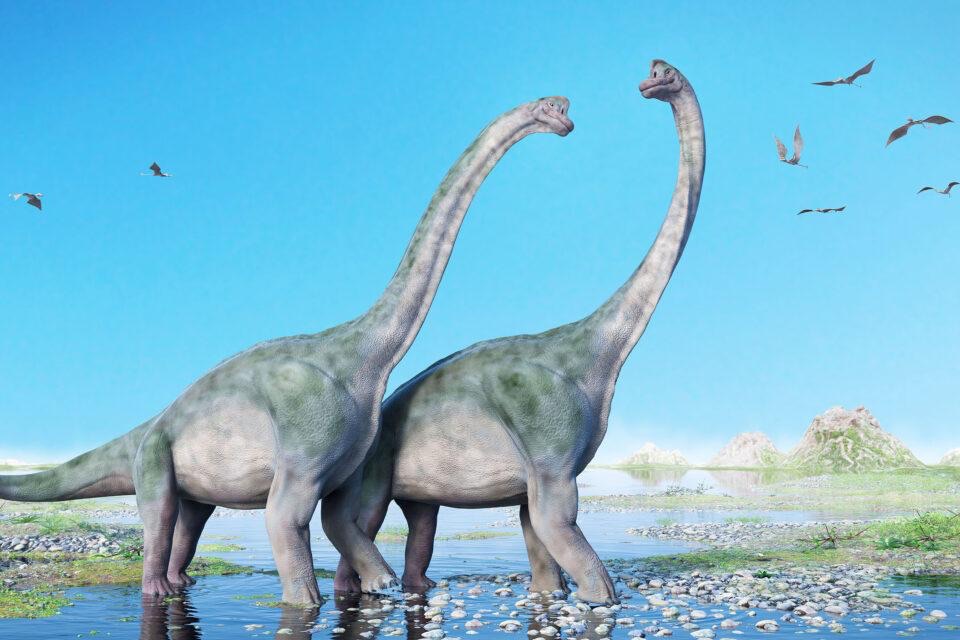
Brachiosaurs, I think. Big sauropods, anyway.

than they are to us. It’s not that they’re descended from huge sauropods—that would have been some spectacular evolution—but that hummingbird evolution goes back through birds to the last common dinosaur ancestor from which what became sauropods and what became theropods (ranging from tyrannosaurs to the protobird archaeopteryx) which is still a long way from the last common ancestor that we share with dinosaurs. Thus a hummingbird is much closer to those enormous lumbering quadruped brontosauruses than it is to us. And while Deep Time has done some weird shit (us, for instance), you’d be hard pressed to find anything more ridiculous than traces of a mutual ancestor 230,000,000 years or so ago in the skeletons of that tiny hummingbird out there and these whatchamallitosauruses pictured here.

Admittedly, an even closer mutual ancestor can be seen in the skeletons of us and the dimetrodon
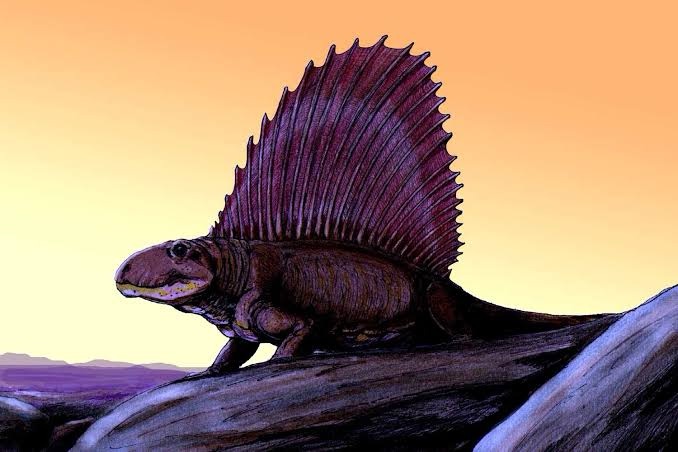
A Dimetrodon basking in the last light of a Permian day.

though we didn’t get that groovy sail (which would’ve evolved after the evolutionary paths of the dimetrodon and mammals parted ways), but we both came from the same mutual ancestor way back in the Permian Age, when critters like the dimetrodon (mostly unsailed) were the biggest critters on dry earth, and judging from the number of fossils dug up were as common (if bigger) then as lizards are now. Nearly all were zapped into extinction in the cataclysm at the end of the Permian, though somehow whatever eventually became you, me, your kitty and Baluchitheriums survived.
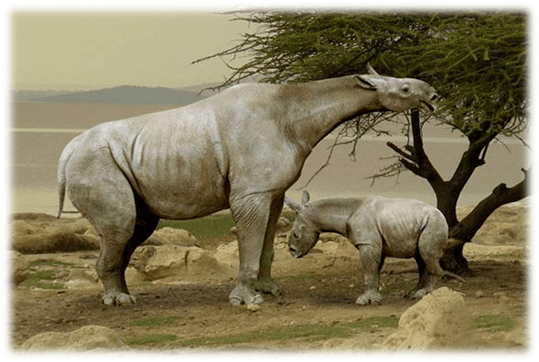
A ridiculously huge Baluchitherium.

That’s our connection with the Dimetrodon, at some time deep in the Permian Age what became a dimetrodon and what became mammals were the same critter. Synapsids—you, me, the dimetrodon, but not dinosaurs, we’re all synapsids. (They used to call synapsids the much easier to say mammal-like reptiles.) Those aggro little hummingbirds out there are dinosaurs (really, birds are as dinosaur as we are mammal), which we shared a very distant ancestor with before synapsids even evolved, going way back into the Permian. Back when big amphibians ruled the roost, proto-newts, big scary slimy things the size of Nile crocodiles. Thats how far you gotta go back to see when you and me and those hummingbirds were all tucked into the same genome. So hummers are as much more akin to giant sauropods than to anything remotely like us. Which makes us and that dimetrodon more similar than you’d expect.

And while nowhere near as big as we imagined it when it tumbled out of our package of plastic dinosaurs on Christmas morning (this was a while ago)—I am taller than it was, sail and all—a dimetrodon is still incredibly weird looking. I mean what’s with the sail? Cooling? Warming? Mating? Male gnarliness? In comparison, as tall as I am (six foot five, nearly two meters) I couldn’t even reach the knee of that giant sauropod standing on my tip toes. It’d squish me into the mud on its way to a giant fern tree. I look at all those goddam hummingbirds swarming around the feeder and I think that. The retired life. Now time for my nap.
Dino Luv

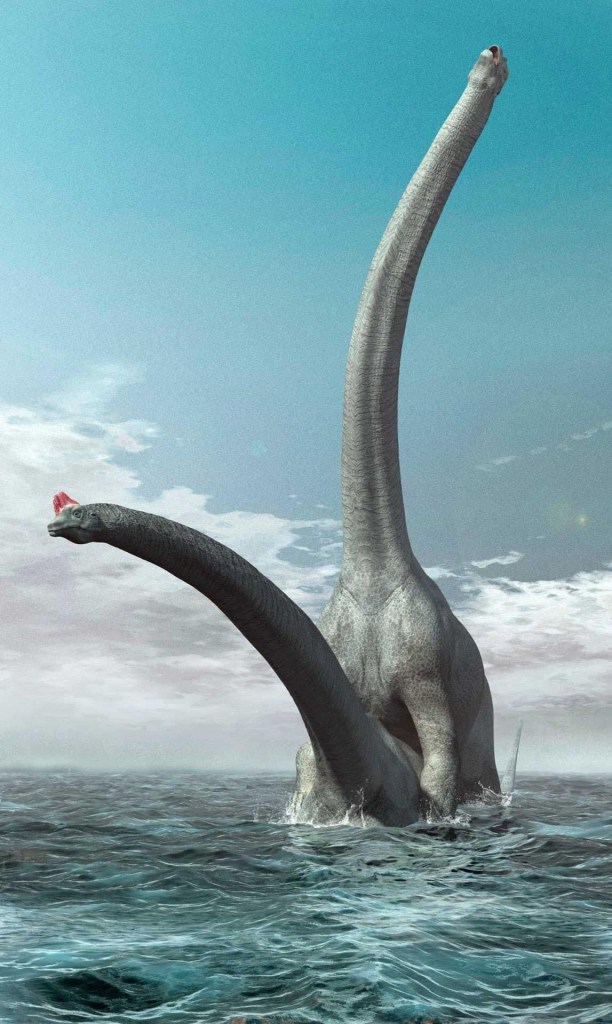
It’s National Dinosaur Day and here is a thing I’m not sure I’m glad I saw on Twitter. It’s a pair of sauropods in flagrante delicto about 120 million years ago. The setting is more romantic than realistic, given that these things shoveled down vegetation by the ton and probably didn’t go splashing around the waters off the coast of what is now Texas in what is now the Gulf of Mexico, or perhaps off the coast of Oklahoma in what was a vast shallow sea that bisected North America from north to south and explains all the fossils of giant marine reptiles they dig up in Kansas. Add a few palm trees and huge ferns for a probably more realistic portrait of what two huge dinosaurs looked like fucking, something I had never thought about before but is burned into my memory now. Incidentally, you’ll notice the male came first. Some things never change.

This extraordinary painting “Sauroposeidon dinosaurs mating” is the work of
José Antonio Peña, I believe in 1993.

Greenheronsaurus

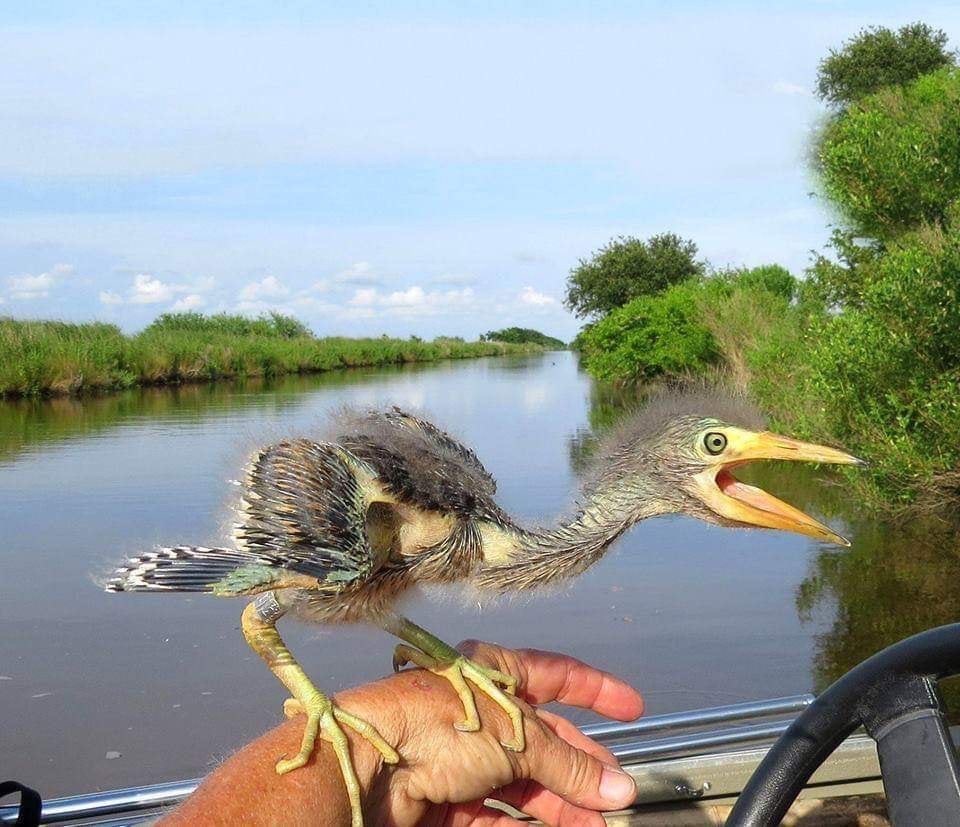
Pretty damn close. This baby green heron doesn’t have any teeth, which a dinosaur would have. And a heron’s wings are much, much stronger than any of its ancestors would have had in the dinosaur era. Feathers, too, have undergone sixty five million years of continuous evolution since the dinosaurs. But for us laypeople (layhumans?) it’s awfully difficult to look at this guy and see the differences between it and a dinosaur sixty-five or a hundred million years ago. It’s a good thing for Stephen Spielberg that Chinese paleontologists uncovered the mother lode of feathered dinosaurs in China after the Jurassic Park series had begun. Well, they’d already been digging them up, it just took a while for the realization to sink in with the public, who were having problems enough trying to accept that an asteroid had ended the Age of the Dinosaurs in a flash. Those were the days when if you knew that tyrannosauruses had feathers you kept it to yourself. You didn’t blurt that kind of thing out, and you certainly didn’t say in it front of the kids. You see that Tyrannosaurus rex chasing Laura Dern? The one that nearly chomped down Jeff Goldblum? It looked like a huge, psychotic chicken! The ushers would deposit your ass out on the curb before you could say Zhuchengtyrannus magnus.

A baby green heron. Photo by JJJ Frank (from the Fascinating page on Twitter)

Allosaurus

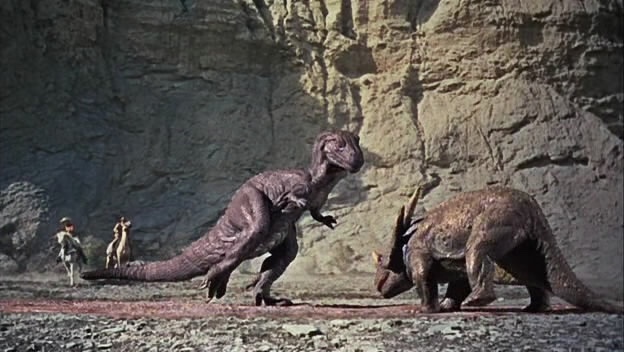
Any dinosaur obsessed school kid knew that in One Million Years B.C. Raquel Welch was chased by an allosaurus and not a tyrannosaurus, though by the time that kid was in high school the genus of the dinosaur mattered less than the topography the dinosaur was chasing. But allosauruses had bigger arms than those silly things dangling from the upper torso of Spielberg’s (and artist/designer Crash McCreery’s) tyrannosaurus, not that you’d notice if you were Jeff Goldblum. But had it truly been a Jurassic Park, it would’ve been an allosaurus ignoring Goldblum’s jokes. The allosaurus was the iconic apex predator of the Jurassic Age, the eater of the brontosaurus (OK, apatosaurus), going back easily 150 million years, whereas T Rex was the apex predator of the Cretaceous period, a mere 70 or 80 million years ago. As I watched the movie that occurred to me, but for once I shut up.

Anyway they found a new allosaurus. Groovy.

A Late Jurassic allosaurus (named Gwangi) beautifully rendered by Ray Harryhausen for The Valley of Gwangi (1969) battling an unnamed Cretaceous styracosaurus. Again with the paleontological discongruities. Also, cowboys.

Meterorite

A thirty plus ton meteorite dug up in Argentina. A larger one had been dug up nearby some time ago. The area is spattered with numerous other craters. Here’s the scary part—apparently both the two ginormous meteorites and the other craters were from the same meteor shower that freaked the locals out of their ever loving minds between 4200 and 4700 years ago, or in the parlance of the press, about the time of the Great Pyramids. (Everything is either older than or the same age as the Pyramids in the news.) Allow yourself a moment to consider the modern possibilities of such a meteor shower. Yes, one could hit Trump. But it could hit the San Fernando Valley too.

Just for comparison, they dug up an 66 ton meteorite in Namibia a century ago that smacked into the Kalahari 80,000 years ago. Again, a mind fuck for the locals, whoever they were then. One wonders, if it were seen, how they conceptualized it. How they discussed it. If they painted it on cave walls in ochre, as they seemed to have been doing not far off not long afterward. If they were even there at all.

But I digress.

The Namibian meteorite (since called the Hoba) is a rough square about nine by nine feet and three feet high. Halve that mass for each of the two Argentine. On the other hand, the megameterorite—an asteroid, perhaps a comet—that whomped into the Gulf of Mexico and zapped all the dinosaurs but birds into the cornfield was from seven to fifty miles in diameter. At that high end you could have wrapped the entire San Fernando Valley around it, with a little squeezing here and stretching there, like some weird Arthur C. Clarke novel, just as a thought experiment. Or you could forget you read that sentence. You could put that Hoba meteorite in my living room and still have room for the Christmas tree.

Considering the perfect math of objects orbiting the sun, some of the millions of asteroids in the solar system, some as big or bigger as the dinosaur whomper, are bound to touch, smack or whomp the earth again, many, many times.

I prefer not to think about it.

Dinosaurs

But dinosaurs didn’t die out. The finch peeping incessantly outside the window right now is a real live annoying little fuck of a dinosaur and is not extinct. Nor was the chicken you ate last night. Well, that particular chicken is extinct, but not the entirety of chickenness. However, non-avian dinosaurs died out–duck billed whatevers and spiky triceratops and clunky ankylosaurs and vast and bulbous titanosaurs. They all went poof instantly or not long after the meteor hit and volcanos belched. As did soaring pterosaurs and swimming mosasaurs and paddling plesiosaurs. Even polyglyphanodonts went extinct at the end of the cretaceous. True, they were only lizards, maybe three feet long and not the least bit scary, but I only posted this so I could say polyglyphanodont. Polyglyphanodont. Polyglyphanodont. Polyglyphanodont. Too much fun.